

B.E Electronics and Communication Engineering
About the Department
The Department of ECE, started in the academic year 2008-2009 offers a four-year B.E. degree program in Electronics and Communication Engineering. The initial intake of the program was 60 students. These programmes prepare students for careers as systems engineers, research engineers, controls engineers, communication engineers and electronic engineers, as well as researchers and academicians. The programs are rigorous with an emphasis in maths and science. Based on the infrastructure facility and faculty strength, the department was accorded approval by AICTE, New Delhi and affiliated to Anna University, Chennai to offer UG Programme.
The Department has excellent infrastructure in terms of laboratories, classrooms, seminar hall, Centre of Excellence, etc. The department laboratories are interconnected through a well-designed seamless network with Internet facility with the speed of 200 Mbps to facilitate the student’s access to web resources. This helps the students in meeting the demands of the regular curriculum and latest technology needs. With the co-operation and involvement of the dedicated team of well-qualified faculty members, the department constantly strives to improve its academic standards. Our students involve in developing the solutions for real time industrial problems and participate in national level and international level competitions and brought laurel to the department.
The Department has always been on a high growth path since its inception. The Department has well qualified; dedicated and experienced faculty specialized in VLSI, Microwave & Optical Engineering, Applied Electronics, Communication Systems, Medical Electronics, Digital Systems and Computer Science etc. The major driving force for the present day Information and Communication Technology revolution is the development in Electronics Engineering. The advancements in microelectronics, communication techniques and networks, satellite communication and optical fibre communication have resulted in developing complex electronics devices, circuits and equipment’s capable of implementing fast and efficient telecommunication systems. Real time transfer of audio and video signals is now possible with recent trends in broad band technologies. Penetration of electronics has now revolutionized other areas like health care, instrumentation, automation, remote sensing, signal and image processing etc.,
The course also covers the study of Electronic Devices and Circuits, Digital Principles, Analog and Digital modulation techniques used for communication, equipment’s and systems involved in Wireless communications, Satellite and Optical communication technologies, Computer communication and Networking, design and development of Microelectronic circuits for computation and processing, components and systems for electronic Instrumentation and Control, hardware and interfacing of computer systems, programming skills and application of computers in signal processing and communication.
Faculty members have also published book chapters and textbooks. All our faculty members periodically enrol for FDPs, and NPTEL courses and thereby enhance their teaching and research skills. The Department is consistently producing very good academic results in the End Semester Examinations. Our students are encouraged to participate in Symposium, Conference, Workshop, etc. organized by other Colleges and Universities. The Department regularly organizes Symposia and Workshops to update the practical knowledge of students. The Department is well equipped with Smart Classrooms, LCD Projectors, advanced equipment in Research and Project Lab.
From the First year onwards, Value Added Courses and Placement Training activities are given to the students by Expert trainers for skill enrichment. Guest lectures are arranged frequently with eminent professors from reputed organizations, research scientists and industrial experts to give the students an insight of cutting edge technologies. Besides academics, our students excel in sports and games by winning prizes in the events organized by other universities and colleges.
The Training and Placement Cell organizes various training programs with renowned expert trainers from industries and multinational companies to improve the oral, written and aptitude skills of the students which pave way to get hired by leading core and IT industries. The Central and Department libraries have good collection of around 5000 volumes of Textbooks and Reference books exclusively for ECE Department.
Program Educational Objectives (PEO's)
PEO1: Apply strong foundations in Electronics, Communication Engineering, Mathematics, and Science to design and implement innovative and sustainable engineering solutions.
PEO2: Excel as competent professionals, researchers, or entrepreneurs by developing advanced communication and embedded system solutions for industrial and societal needs.
PEO3: Engage in lifelong learning through higher education, professional certifications, research, and adaptation to rapidly evolving technological advancements.
PEO4: Demonstrate leadership, ethical responsibility, teamwork, and social commitment in addressing environmental and global challenges through technology-driven solutions.
Programme Outcomes (PO’S)
PO1: Engineering knowledge: Apply the knowledge of mathematics, science, engineering fundamentals, and an engineering specialization to the solution of complex engineering problems.
PO2: Problem analysis: Identify, formulate, review research literature, and analyze complex engineering problems reaching substantiated conclusions using first principles of mathematics, natural sciences, and engineering sciences.
PO3: Design/development of solutions: Design solutions for complex engineering problems and design system components or processes that meet the specified needs with appropriate consideration for the public health and safety, and the cultural, societal, and environmental considerations.
PO4: Conduct investigations of complex problems: Use research-based knowledge and research methods including design of experiments, analysis and interpretation of data, and synthesis of the information to provide valid conclusions.
PO5: Modern tool usage: Create, select, and apply appropriate techniques, resources, and modern engineering and IT tools including prediction and modelling to complex engineering activities with an understanding of the limitations.
PO6: The engineer and society: Apply reasoning informed by the contextual knowledge to assess societal, health, safety, legal and cultural issues and the consequent responsibilities relevant to the professional engineering practice.
PO7: Environment and sustainability: Understand the impact of the professional engineering solutions in societal and environmental contexts, and demonstrate the knowledge of, and need for sustainable development.
PO8: Ethics: Apply ethical principles and commit to professional ethics and responsibilities and norms of the engineering practice.
PO9: Individual and teamwork: Function effectively as an individual, and as a member or leader in diverse teams, and in multidisciplinary settings.
PO10: Communication: Communicate effectively on complex engineering activities with the engineering community and with society at large, such as, being able to comprehend and write effective reports and design documentation, make effective presentations, and give and receive clear instructions.
PO11: Project management and finance: Demonstrate knowledge and understanding of the engineering and management principles and apply these to one’s own work, as a member and leader in a team, to manage projects and in multidisciplinary environments.
PO12: Life-long learning: Recognize the need for and have the preparation and ability to engage in independent and life-long learning in the broadest context of technological change.
Programme Specific Outcomes (PSO's)
PSO1: Analyze, design, and develop advanced communication systems using emerging technologies such as 5G/6G, Wireless Networks, Signal Processing, and Optical Communication.
PSO2: Design and implement embedded systems, IoT solutions, VLSI architectures, and automation systems for industrial, healthcare, and smart infrastructure applications.
PSO3: Apply modern engineering tools, simulation software, hardware platforms, and research methodologies to innovate sustainable and scalable electronics solutions.
Vision
To emerge as a Centre of Excellence in Electronics and Communication Engineering by fostering innovation, advanced research, ethical practices, and sustainable technological solutions for global connectivity and societal development..
Mission
- To deliver outcome-based education through contemporary curriculum, modern laboratories, digital learning platforms, and industry-integrated pedagogy in emerging areas such as 5G/6G communication, VLSI, Embedded Systems, IoT, AIoT, Robotics, and Signal Processing.
- To equip students with strong foundations in electronics, communication systems, and interdisciplinary technologies to solve real-world engineering challenges.
- To promote research, innovation, consultancy, and entrepreneurship through industry collaboration, incubation support, funded projects, and technology transfer.
- To develop globally competent engineers with leadership qualities, ethical values, environmental consciousness, and commitment to lifelong learning.
- To design and implement sustainable and smart solutions for healthcare, smart cities, renewable energy systems, automation, and societal welfare.
Quality Objectives
- To achieve CO–PO attainment levels above the benchmark target (≥ 60%) through continuous academic improvement.
- To enhance research productivity through publications, patents, funded projects, and consultancy in advanced communication and electronics domains.
- To organize technical workshops, FDPs, conferences, industry-certified programs, and skill development initiatives annually.
- To improve student placement, core industry internships, higher studies, and start-up ventures year by year.
- To establish active MoUs with core industries, R&D organizations, and academic institutions for collaborative research and training.
- To integrate emerging technologies such as 6G, AI-integrated communication systems, Edge Computing, and Smart Embedded Systems into curriculum and projects.
Communication Laboratory
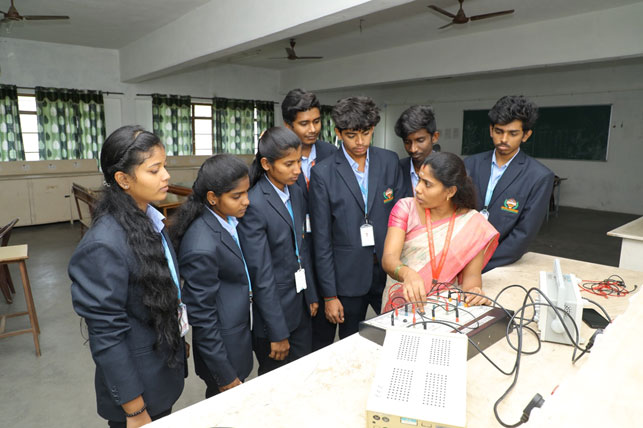
The Communication Systems Laboratory provides hands-on experience in analog and digital communication techniques. Students perform experiments on modulation, demodulation, sampling, and digital communication schemes, strengthening their understanding of communication system analysis and design.
System Laboratory- Embedded Systems and IoT Design
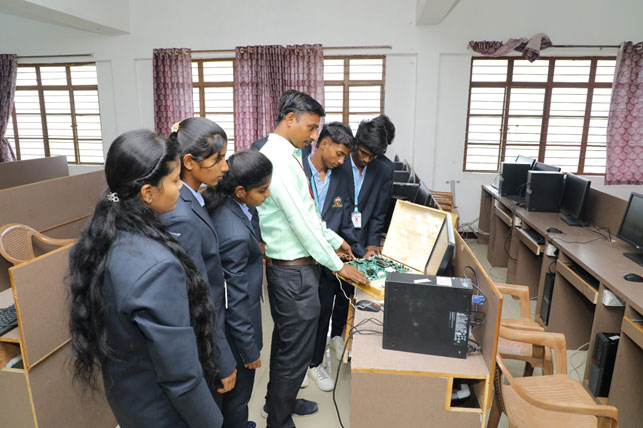
The Embedded Systems and IoT Design Laboratory offers practical experience in designing, programming, and interfacing embedded systems and IoT applications. Students work with microcontrollers, sensors, communication modules, and development tools to build and test real-world embedded and IoT solutions.
Digital Laboratory
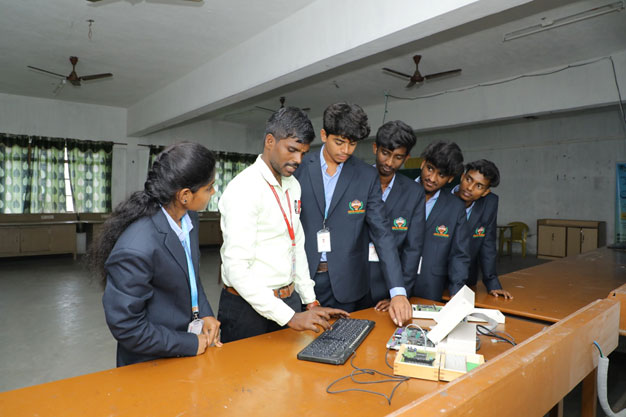
The Digital Laboratory provides practical experience in designing and implementing digital circuits and systems. Students perform experiments using logic families, combinational and sequential circuits, and programmable devices to strengthen their understanding of digital system design and analysis.
Faculty Details
| Sl.No | Name & Designation | AU - FIN | AICTE ID | Photo |
|---|---|---|---|---|
| 1 | Mrs.V.Jothilakshimi Assistant Professor |
2694781985 | 1-429643401 |  |
| 2 | Mrs.S.Naveena Assistant Professor |
2610421988 | 1-747642624 |  |
| 3 | Mr.P.Vijyganesh Assistant Professor |
2627141991 | 1-43412929958 |  |
| 4 | Mr.B.Dheenadhayalan Assistant Professor |
2692931991 | 1-2493797636 |  |
| 5 | Mr.M.P.Premkumar Assistant Professor |
2620841993 | 1-43414514093 | 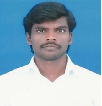 |
| 6 | Mrs.M.Priyadharshini Assistant Professor |
2670711995 | 1-45241073295 |  |
| 7 | Mrs.S.Gowri Assistant Professor |
2654471994 | 1-43413688711 |  |
| 8 | Mr.A.Jaganathan Assistant Professor |
2660081991 | 1-44742740154 | 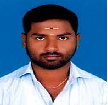 |
| 9 | Mrs.M.Meena Assistant Professor |
2684621996 | 1-3575270600 |  |
| 10 | Mr.M.Jeevabharathi Assistant Professor |
2748791986 | 1-47948578026 | 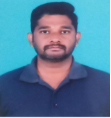 |

Placement
Coming Soon
Achievements
Coming Soon
Event
Coming Soon