

M.E EST (Embedded System Technologies)
About the Department
M.E. – Embedded System Technologies (EST)
The M.E. in Embedded System Technologies (EST) is designed to provide advanced knowledge and practical expertise in embedded hardware and software system design. The program focuses on real-time systems, VLSI, IoT, automation, and intelligent electronic systems to meet the demands of modern industries.
Students gain strong analytical and technical skills in microcontrollers, processors, FPGA-based design, communication protocols, and system integration. The curriculum emphasizes research, innovation, and industry-oriented learning through well-equipped laboratories and project-based training.
The program prepares graduates for careers in embedded systems, semiconductor industries, automation, electronics product development, and research organizations.
Career Opportunities
Graduates of the M.E. – Embedded System Technologies program can pursue careers in:
- Embedded Systems Design and Development
- Real-Time Systems Engineering
- VLSI and FPGA Design
- Semiconductor Industry
- IoT System Development
- Automation and Control Systems
- Robotics and Intelligent Systems
- Electronics Product Design and Testing
- Automotive Electronics
- Aerospace and Defence Electronics
- Research and Development Organizations
- Academic and Research Institutions
- Entrepreneurship in Embedded and IoT-based Solutions
Program Educational Objectives (PEOs)
PEO1: Excel in professional careers in embedded systems, electronics, automation, semiconductor industries, and related engineering domains.
PEO2: Apply advanced knowledge of embedded hardware and software systems to design and develop real-time and intelligent solutions.
PEO3: Engage in research, innovation, entrepreneurship, or pursue higher studies such as Ph.D. programs.
PEO4: Demonstrate leadership, teamwork, ethical responsibility, and effective communication skills in multidisciplinary environments.
Program Outcomes (POs)
PO1: Independently carry out research, investigation, and development work to solve complex embedded system problems.
PO2: Analyse, design, and implement embedded hardware and software systems for real-time applications.
PO3: Apply modern engineering tools, simulation software, and development platforms for system optimization and validation.
PO4: Develop innovative solutions integrating microcontrollers, processors, sensors, and communication protocols.
PO5: Solve complex multidisciplinary engineering problems considering societal, environmental, and sustainability aspects.
PO6: Prepare and present technical reports, research papers, and project documentation effectively.
PO7: Practice professional ethics and work effectively as an individual, team member, or leader.
PO8: Engage in lifelong learning and adapt to emerging technologies such as IoT, AI, VLSI, and smart automation systems.
Program Specific Outcomes (PSOs)
PSO1: Design and develop embedded hardware systems using microcontrollers, processors, FPGAs, and VLSI technologies.
PSO2: Develop real-time embedded software applications using modern programming platforms and communication protocols.
PSO3: Integrate IoT, AI, wireless communication, and automation technologies to build intelligent and sustainable systems.
Vision
To develop competent postgraduates in Embedded System Technologies capable of research, innovation, and leadership in intelligent and sustainable electronic systems.
Mission
- Provide advanced education in embedded systems, VLSI, IoT, and automation.
- Promote research and innovation in smart and real-time systems.
- Strengthen industry collaboration and practical exposure.
- Foster ethics, leadership, and lifelong learning.
Faculty
| Sl.No | Name & Designation | AU - FIN | AICTE ID | Photo |
|---|---|---|---|---|
| 1 | Dr. C.Udayakumar Associate Professor |
2614271974 | 1-2493797636 |  |
| 2 | Mrs.S.Gowri Assistant Professor |
2654471994 | 1-43413688711 |  |
| 3 | Mrs.S.Susmitha Assistant Professor |
2658431995 | 1-9313700611 |  |

Communication Laboratory
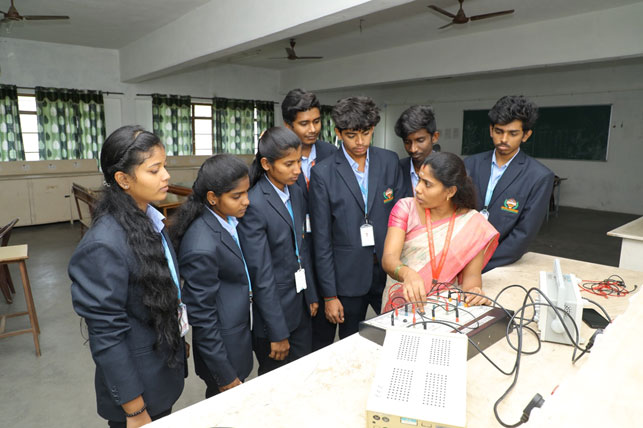
The Communication Systems Laboratory provides hands-on experience in analog and digital communication techniques. Students perform experiments on modulation, demodulation, sampling, and digital communication schemes, strengthening their understanding of communication system analysis and design.
System Laboratory- Embedded Systems and IoT Design
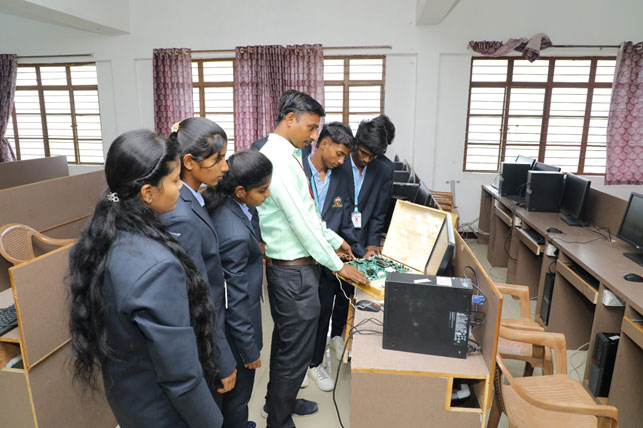
The Embedded Systems and IoT Design Laboratory offers practical experience in designing, programming, and interfacing embedded systems and IoT applications. Students work with microcontrollers, sensors, communication modules, and development tools to build and test real-world embedded and IoT solutions.
Digital Laboratory
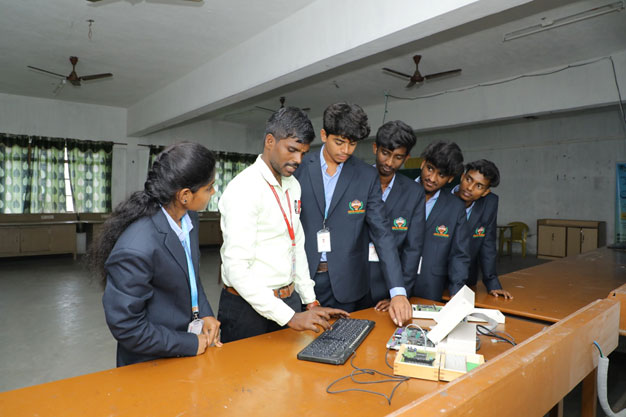
The Digital Laboratory provides practical experience in designing and implementing digital circuits and systems. Students perform experiments using logic families, combinational and sequential circuits, and programmable devices to strengthen their understanding of digital system design and analysis.
Placement
Coming Soon
Achievements
Coming Soon
Event
Coming Soon